Last night, we were studying Ephesians 3:14-21 at our Sunday evening Bible study. I've studied Ephesians a lot over the years, but last night this jumped off the page at me: "know this love that surpasses knowledge" (v. 19)
Some would take this to be some esoteric kind of love that is warm and fuzzy and that Paul's words "surpasses knowledge" would simply mean a love that is "more than words" (as the glam rock band Extreme sang about in 1991).
While the love of God is so immense, "wide, long, high and deep" as Paul wrote in v. 18, I was impressed by the context of the chapter and where this phrase sits in relation to the remainder of the book. Ephesians ch. 3 is the "pivot" chapter of the letter. It's that chapter that swings the transition from the doctrinal basis of our salvation by grace alone, through faith alone in Christ alone, to practical application.
In view of the context of this statement, I'm pretty convinced (knowing what is to come) that Paul is encouraging us to experience the love of Christ beyond mere knowledge and beyond warm feelings. We are called to live out that love in the community of the Church and the world in which we live. I'm certain that this phrase, "love that surpasses knowledge," is Paul's way of saying "don't just have words of love and knowledge of love. Have a life of active and interactive love" (see also I Corinthians 8:1). The remainder of Ephesians will then open up to practical instruction for love in action in all spheres of our lives.
As Jesus said in John 13:35 "the world will you know you are my disciples by how you love one another."
Monday, September 5, 2011

Wednesday, August 31, 2011
Responding to Grace

Years ago, Francis Schaeffer asked the question "How Then Should We Live?" Probably every preacher thinks of this question when he is preparing his sermons and lessons. Many of us err greatly in answering this question.
Since Adam and Eve, people have sought to avoid accountability. Our human nature is such that we run from anything that remotely resembles accountability. We do this in two ways, as an old friend said, "we swing like a pendulum between liberty and legalism." So, where am I going with this?
The Gospel is a gift. That's grace. God saves whom He will by His mercy and love, not for works we have done or could do (Luke 10:22; Ephesians 2:8-10). So, how should we respond? There are typically two responses: Liberty and Law.
Liberty shouts joyfully, "Woo Hoo!!! I'm redeemed and forgiven! I can run wild and Jesus Paid it All." A college friend once said, "God and I have a good thing going. He likes to forgive sins and I like to commit sins." Liberty doesn't get it.
Law's response to the Gospel is quite different. It's joyful but it's looking for the rule book (or to write a new one) that will force the believer to do right.
Which is right? Neither. We need balance. We need to the happy heart of the libertine and we need some of the structure of the legalist. The Bible teaches us that the most appropriate response to grace is gratitude (which has grace as it's root word).
Gratitude is the disposition of joy that comes from one who understands the Gospel: I'm a sinner saved by God's free and amazing grace. "Now," says Gratitude, "how can I show my thankfulness to this Loving God?"
I love the outline proposed by the Dutch and Lutherans: Guilt, Grace, Gratitude. God's law tells us repeatedly that we are guilty of sin, and sinfulness. His Gospel then tells us about his immense love for us that "while we were sinners, Christ died for us." The question then remains, "How will I respond to grace?"
I can go wild and effectively snub my nose at the giver, or I can gratefully seek to please the giver by discovering what He likes. As John Piper said, "I will be most satisfied with God when He is most glorified in my grateful heart."
Monday, July 4, 2011
We Hold These Truths


For the past several years I have made it a tradition to read the Declaration of Independence on July 4. I remember when this tradition began, I was struck by the terse nature of the Declaration. It is not verbose. At that time, I was slogging my way through David McCullough's biography on John Adams and I had reached late June/early July 1776 when Adams had written Abigail to tell her the news the coming declaration that would forever sever America's ties to the Crown. He even told her that he predicted that in future times, the day would be marked with great celebration, fanfare and fireworks!!
The Declaration is short. It is to the point and it is incendiary. The point is simple: people were created by God to live freely and without the threat of a tyrant or tyrannical government. King George was esteemed to be the worst tyrant of all. At least 27 times in the Declaration George is blamed for all manner of evil. I was surprised that they didn't blame him for the flu. In John Adams, there is even a statement blaming George for importing the sinful practice of slavery to the Americas. That statement was deleted so as not to create division with the fragile wanna-be republic. The point is clear. They didn't like this guy ... at all.
The 56 men who put their name to this statement were literally putting their heads on the chopping blocks. By signing this treasonous article, there was now question about their role as traitors against the Monarch. If captured, these men (the most influential of the time) would be subject to execution. Yet they pressed on.
The words I find most stirring are those of the concluding sentence: "And for the support of this Declaration, with a firm Reliance on the Protection of divine Providence, we mutually pledge to each other our Lives, our Fortunes and our sacred Honor." This sentence is the battle cry of "Let's Do This!" The signers were putting all they had worked toward on the line for something that - if successful - would be monumental. But, if it failed, "disastrous" doesn't even come close to the right word. When I read that statement I wonder, "Am I the kind of man who is willing to sacrifice so much for a cause and for my brethren?" While I think I am that kind of man, I am ashamed that most of our country is quite cowardly. I read this morning in the Wall Street Journal that less than 1% of Americans serve in uniform. In World War 2, if a capable adult man was NOT in uniform it was out of the norm. There are very few among us who are willing to drop what they are doing, change course and take a new direction for the sake of others.
In the 1992 movie "A Few Good Men," the antagonist - Col. Nathan Jessep said something that is quite stirring. "we live in a world that has walls, and those walls have to be guarded by men with guns ... We use words like honor, code, loyalty. We use these words as the backbone of a life spent defending something. You use them as a punchline. I have neither the time nor the inclination to explain myself to a man who rises and sleeps under the blanket of the very freedom that I provide, and then questions the manner in which I provide it."
While I am saddened by so many that think of honor, code, loyalty and duty as titles to video games, it encourages to me look at the very few young men and women who don't view this country as a punchline nor take for granted that "blanket of freedom" that has been provided by the sacrifices of so many.
On this day, I am thankful to be an American. I am thankful that due to the "Protection of divine Providence" I have had the luxury of living in a nation that protects freedom. I am thankful for men who have sacrificed for my sake. Men like Charles A. Miller, Patrick Tillman, and William Norred were not looking for glory or status. The men and women who have given for this nation's strength and security are the fulfillment of the dream that took flight 235 years ago in Philadelphia, PA.
Sunday, June 19, 2011
Our True Super Hero

At the end of Quentin Tarantino's "epic" Kill Bill, there is a discourse by "Bill" about his favorite super-hero: Superman. In his speech, Bill explains why he likes The Man of Steel above all others in the super-hero mythology genre.
The main point of the comparison is that Superman doesn't have to BECOME someone else. He doesn't assume a different identity as others do. Peter Parker puts on a costume and becomes Spiderman, Bruce Wayne does the same to become Batman, Bruce Banner becomes the Incredible Hulk, and, most recently Tony Stark becomes Iron Man when dons the uniform.
This is not the routine for Superman. He was born Superman. When he came to Earth from Krypton and was found by the Kent family, his blanket was actually his future-cape. You see, Superman WAS always Superman. There never was a time when he was not Superman. IN fact, Superman had to set aside his real identity in order to mingle in the lives of those whom he was to serve. When Superman put on his "costume," it was the costume of one of us. He became the mild-mannered, journalist Clark Kent. When there was a need that looked "like a job for Superman," it was the costume of Clark Kent (the alter-ego) that was shed for the reality of Superman.
Philippians 2:6-11 tells us that Jesus is the REAL superman who, as God "did not consider equality with God something to be grasped, but made himself nothing, taking the very nature of a servant, being made in human likeness... He humbled himself" in order to do for us what we could never do: living a perfectly righteous and God-pleasing life.
One preacher noted several years ago that the "swaddling cloths" that Jesus was wrapped in as an infant would have also been used as burial cloths (like those Joseph of Arimathea used to wrap Jesus' body after the crucifixion). Jesus was FAR more than some carpenter's son who later became the leader of a new religious sect when he put on his new costume and played a different role. Jesus never ceased to be God. He put on a uniform of flesh and blood in order to live the life we could not and die the death we deserve - all for our benefit and the glory of God.
Colossians 1:15-23 is a great discourse from the Apostle Paul on Jesus' mission and divinity. In verses 19 - 20 we are told that Jesus' work - on our behalf - was so right that "God was pleased to have all his fullness dwell in him and through him to reconcile to himself all things ... by making peace through his blood, shed on the cross."
Because of the REAL Superman we, who "once were alienated from God and were (His) enemies ... because of (our) evil behavior. But now (two of the greatest words in Scripture) HE has reconciled you by Christ's physical body through death to present you holy in his sight, without blemish and free from accusation" (Col 1:21-22).
Paul goes on to say "this the gospel." Indeed, it is the gospel - GOOD NEWS!
Tuesday, February 15, 2011
Real Budget Cuts or just more talk....

On Dec 4, 1994 the late Tony Snow wrote a suggestion in his op-ed on how to cut spending and eliminate debt in the United States. The article was entitled "How to Eliminate Welfare to Wealthy? Cut, Cut, Cut."
In the article, Snow suggested (now remember, this was 1 month after the Republicans historic sweep of Congress) that we first cut the number of Cabinet positions from 14 to 8. Here are the suggestions:
1. Eliminate the Depts of Agriculture, Energy, Interior, Labor and Transportation and move their remnants to the Dept of Commerce.
2. Eliminate the Dept of Education and HUD, then merge their "defensible" functions to a new "Dept of Health, Education and Welfare." I'll add here that since 1978 (the year Carter gave us the DoE), our kids have gotten dumber and our costs have only gotten higher. Way to go, DC!
3. Fold Dept of Veterans Affairs back into Dept of Defense.
I would add a fourth suggestion that wasn't available in 1994. Fold "Homeland Security" into Defense as well!!
Wednesday, January 12, 2011
Success in the Church and Inadequacy of the Modern Seminary Education
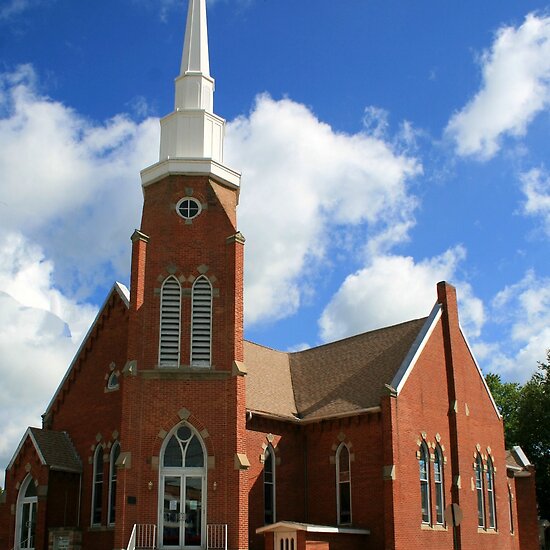
"I think the Lord must love small churches," stated my wise father-in-law. "Why do you say," was the quick reply. "Because He's got so many of them," said the sage.
How do we measure success in the Church? Most folks give the "right" answers of an increased visibility in the fruit of the Spirit displayed through holiness, mercy, love, generosity, faithful preaching, teaching, discipline and administration of the sacraments. But, underneath this correct answer is an unspoken, unofficial answer that seems to be held more dearly: Nickels, Noses, and Numbers. If these three categories are steadily increasing, the pastor and church are deemed "successful" and God is certainly "at work in that ministry." Maybe so. My concern, however, is that this unspoken and unofficial message has creeped into the seminary classrooms and is wrongly infecting the young men seeking to be the next generation of pastors and ministers.
Recently I was speaking with a very well-informed friend who let me know that the majority of men in seminary today "don't want to pastor a small church or work in a church that is in need of revival and revitalization." I was floored. Surely she was speaking in hyperbole. "No," my friend said, "they want to be in big churches or seminary professors."
As we talked on, it was plain to understand. These future "ministers" are being taught that the small local church is unimportant. What a shame!
Why is this? I think there are several reasons, and I blame the seminaries.
1. Seminaries are defining "success" by graduating more students each year than in prior years. This is part of the sales pitch to the supporters. In the name of "success" seminaries are asking for more money and more students. To demonstrate the success, seminaries have "successful" graduates return to deliver addresses on how to be successful.
2. We are also seeing a watered-down education in the modern reformed seminary. It's a simple matter of Supply and Demand. First, there aren't that many reformed pastors who are also qualified to also teach at the seminary level. Second, there aren't that many candidates in reformed circles. Third, the rate of expansion leads to a diminished quality of education by resorting to untested, inexperienced professors who haven't been pastors. Currently, only ONE "feeder" seminary to the PCA requires a class in the Westminster Confession of Faith (the central doctrinal document of Reformed Theology).
3. In the quest for success, most Reformed seminaries are no longer calling experienced ministers to serve as professors who will teach from their experiences in local congregations. My own seminary had a rule that a professor must serve as a pastor for at least 10 years before becoming a professor. I don't think that rule is currently followed. While these young profs may be very smart, they have no experience in leading congregation through the ups and downs of day-to-day ministry. This creates a new dilemma of sorts. How will the seminarian have adequate preparation for ministry if his best teachers have never known how to prepare 3 sermons a week, conduct a funeral, wedding, act as mediator in disputes, counsel a grieving family, etc...
4. The new students, sensing a call to ministry, are easily enamored by their erudite professors and quickly come to see them as "heroes" and hope to one day emulate their heroes. But, their heroes have never been pastors. This breeds, in the seminarian, a desire to be a professor rather than pastor. After all, his hero was never a pastor and well, he's "successful."
As much as I hate to say it, this isn't producing a heart for reaching the lost.
5. In Reformed circles there aren't that many open churches to take all these new graduates. In addition, church plants are closing and I see no signs of coming revival that will employ these new ministers.
The result is sad for the churches and the seminary graduates. Small churches are neglected because they lack the pizazz. And, unless these new seminary graduates can get a call to a "significant" ministry or church, they are foregoing service to a small church and seeking a PhD so that they can pursue their new ministerial brass ring.
I once had a minister tell me, "the more letters behind your name (degree abbreviations), the more successful you will be." Then, I had the privilege of watching a man serve one church for over 50 years in the boondocks of West Alabama. He lived and died in one church. He never shook the world. He never had a large congregation. But, God used that man to touch the lives of His sheep.
The modern church desperately needs a paradigm shift in regards to how we define success. For further reading, I heartily recommend "Radical" by David Platt.
Subscribe to:
Comments (Atom)