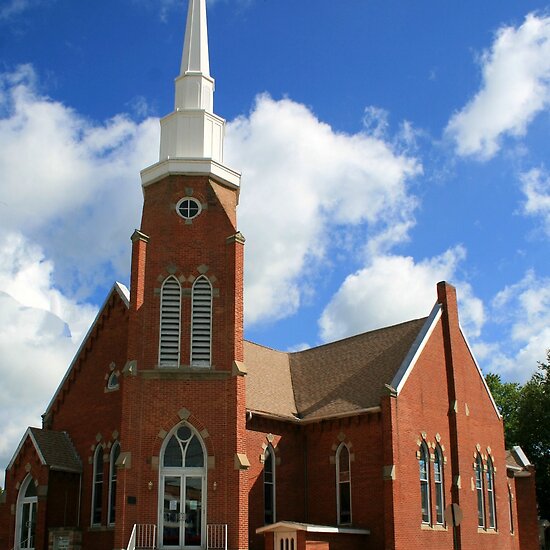
"I think the Lord must love small churches," stated my wise father-in-law. "Why do you say," was the quick reply. "Because He's got so many of them," said the sage.
How do we measure success in the Church? Most folks give the "right" answers of an increased visibility in the fruit of the Spirit displayed through holiness, mercy, love, generosity, faithful preaching, teaching, discipline and administration of the sacraments. But, underneath this correct answer is an unspoken, unofficial answer that seems to be held more dearly: Nickels, Noses, and Numbers. If these three categories are steadily increasing, the pastor and church are deemed "successful" and God is certainly "at work in that ministry." Maybe so. My concern, however, is that this unspoken and unofficial message has creeped into the seminary classrooms and is wrongly infecting the young men seeking to be the next generation of pastors and ministers.
Recently I was speaking with a very well-informed friend who let me know that the majority of men in seminary today "don't want to pastor a small church or work in a church that is in need of revival and revitalization." I was floored. Surely she was speaking in hyperbole. "No," my friend said, "they want to be in big churches or seminary professors."
As we talked on, it was plain to understand. These future "ministers" are being taught that the small local church is unimportant. What a shame!
Why is this? I think there are several reasons, and I blame the seminaries.
1. Seminaries are defining "success" by graduating more students each year than in prior years. This is part of the sales pitch to the supporters. In the name of "success" seminaries are asking for more money and more students. To demonstrate the success, seminaries have "successful" graduates return to deliver addresses on how to be successful.
2. We are also seeing a watered-down education in the modern reformed seminary. It's a simple matter of Supply and Demand. First, there aren't that many reformed pastors who are also qualified to also teach at the seminary level. Second, there aren't that many candidates in reformed circles. Third, the rate of expansion leads to a diminished quality of education by resorting to untested, inexperienced professors who haven't been pastors. Currently, only ONE "feeder" seminary to the PCA requires a class in the Westminster Confession of Faith (the central doctrinal document of Reformed Theology).
3. In the quest for success, most Reformed seminaries are no longer calling experienced ministers to serve as professors who will teach from their experiences in local congregations. My own seminary had a rule that a professor must serve as a pastor for at least 10 years before becoming a professor. I don't think that rule is currently followed. While these young profs may be very smart, they have no experience in leading congregation through the ups and downs of day-to-day ministry. This creates a new dilemma of sorts. How will the seminarian have adequate preparation for ministry if his best teachers have never known how to prepare 3 sermons a week, conduct a funeral, wedding, act as mediator in disputes, counsel a grieving family, etc...
4. The new students, sensing a call to ministry, are easily enamored by their erudite professors and quickly come to see them as "heroes" and hope to one day emulate their heroes. But, their heroes have never been pastors. This breeds, in the seminarian, a desire to be a professor rather than pastor. After all, his hero was never a pastor and well, he's "successful."
As much as I hate to say it, this isn't producing a heart for reaching the lost.
5. In Reformed circles there aren't that many open churches to take all these new graduates. In addition, church plants are closing and I see no signs of coming revival that will employ these new ministers.
The result is sad for the churches and the seminary graduates. Small churches are neglected because they lack the pizazz. And, unless these new seminary graduates can get a call to a "significant" ministry or church, they are foregoing service to a small church and seeking a PhD so that they can pursue their new ministerial brass ring.
I once had a minister tell me, "the more letters behind your name (degree abbreviations), the more successful you will be." Then, I had the privilege of watching a man serve one church for over 50 years in the boondocks of West Alabama. He lived and died in one church. He never shook the world. He never had a large congregation. But, God used that man to touch the lives of His sheep.
The modern church desperately needs a paradigm shift in regards to how we define success. For further reading, I heartily recommend "Radical" by David Platt.

2 comments:
While I agree that success in church is not found in just counting noses. But there is more not not wanting to pastor a small church in need than just money and success. As a seminary grad and a pastor of two small churches, one with very open conflict and a previous pastor that took money and advantage of the church and church that needed to reconnect with it's community, I walked away from those ministries broken and burned out. There is a huge emotional burden in leading people in change. Can you blame young men and women from not really wanting to engage in that sort of ministry? Besides in seminary a professor and be looked up to for rocking the boat a bit, but the cost of doing that as a pastor is huge.
Chuck - I have pastored a couple of small hurting churches and you're right. Serving them is painful. All the more reason to have men who have "been there, done that" to instruct future ministers. I was not well-prepared for the conflict and gross sin that was in my first church (at the ripe age of 27), but my professors could be called because they were familiar.
Post a Comment